
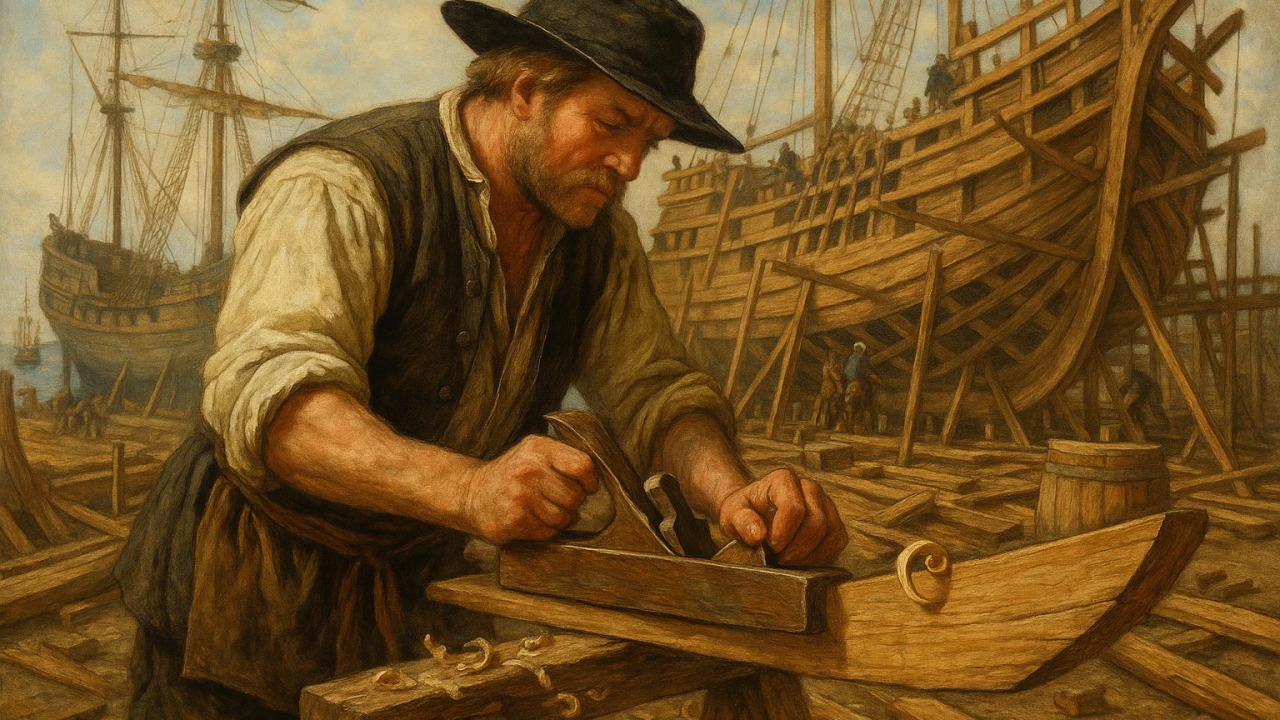
Once, there was a ship builder known as the finest builder of ships. Sleek, elegant, seaworthy vessels—commissioned by merchants, admired in harbors, envied by rivals.
Every plank it laid, every sail it rigged, added to its legend. “He builds the best ships,” people would say. And indeed they did.
But over time, things started to shift.
The ship builder began to see patterns that its clients didn’t. Most of their problems weren’t on the water. They were back on land—slow-loading docks, tangled logistics, crews working in the dark.
So the ship builder evolved. It stopped just building ships. It started redesigning ports! It helped captains run faster routes, trained smarter crews, and streamlined cargo flow.
Unfortunately, however, the world still knew him as the shipbuilder.
Clients came for hulls and masts, not integrated fleets. They didn’t pay attention to the system that the shipbuilder had learned to fix, because they were still staring at the vessel.
So, the shipbuilder was stuck. But not because it was behind schedule. It was stuck because his story was!
It took a while, but the shipbuilder finally saw the problem clearly: His craft had evolved, but his story had not.
Each time a new captain arrived at his dock, they asked the same old question: “Can you build me a ship?” Never: “Can you help me move better across the sea?”
So, he had to do what great navigators always did when the map no longer matches the territory: He redraw it!
First, he stopped showing only ships. He started showing voyages!
Stories of merchants who sailed faster, carried more, wasted less, not because of finer woodwork, but because everything behind the voyage had been redesigned.
Then, he changed his sign. It no longer read “Master shipbuilder.” It now read: “Master of Seamless Trade.” Simple. Unfamiliar. But true.
Some old clients squinted. A few walked past, confused. But others stepped forward with different questions: “How do we shorten our routes?”, “Can you help us work smarter between ports?” These were his patrons now.
And one more thing.
He built a small fleet of case studies—each one a proof of concept. Each one solving old problems in new ways. He didn’t try to convince everyone. Just enough to shift the wind.
Over time, the harbor whispers changed. No longer: “They build beautiful ships.” But: “They make trade flow easier.”
And just like that, the shipbuilder became something rarer than a master of craft. He became a master of movement.
How Can You Escape the Shipbuilder’s Trap?
If your B2B brand is still known for what you used to do best, you’re likely caught in the Shipbuilder’s Trap: your reputation lags behind your evolved capabilities — one of the clearest signs a brand is in trouble.
Like the shipbuilder who moved from crafting vessels to optimizing entire trade systems, many B2B companies today offer sophisticated, end-to-end solutions but struggle against an outdated market perception.
The fix isn’t just better marketing; it’s about rewriting your story. Shift from showcasing products to highlighting outcomes—show clients the impact of your work, like faster operations or smarter workflows, through vivid case studies.
Update your brand’s “sign” with messaging that reflects your current value, even if it feels unfamiliar at first. Some clients may hesitate, but the right ones will ask new questions, unlocking the full potential of what you now deliver. Embrace the discomfort of change, and turn whispers of your past into bold conversations about your future.
Enter? Positioning Roadmap
This is exactly why you need a positioning roadmap. Think of it as your plan for gradually changing how people see your business—step by step, over time.
Just like the shipbuilder couldn’t suddenly be seen as a “trade architect,” you can’t transform your reputation overnight. But you can create a clear path to get there.
A positioning roadmap helps you move from “we’re known for X” to “we’re known for Y” in stages. Maybe you start by mentioning new benefits alongside your original service. Later, those benefits become your main story.
The key is matching your story to what you can actually deliver at each stage. Don’t promise “seamless trade solutions” when you’re still mainly building ships. But don’t stay stuck talking about “beautiful craftsmanship” when you’re already redesigning entire systems.
To start, build a fleet of proof points. Create concise, compelling case studies — like the ones in my own work — that demonstrate how your evolved services solve modern problems in innovative ways. Share stories of clients who’ve benefited from your broader expertise, and let data speak louder than legacy.
By consistently aligning your narrative with your current capabilities, you’ll turn your brand from a relic of past greatness into a launchpad for new relevance. And when the next captain arrives, they won’t ask for a ship. They’ll ask for a better way forward. That’s when you’ll know: you’ve changed the conversation—and the course.