Category Archives: Positioning

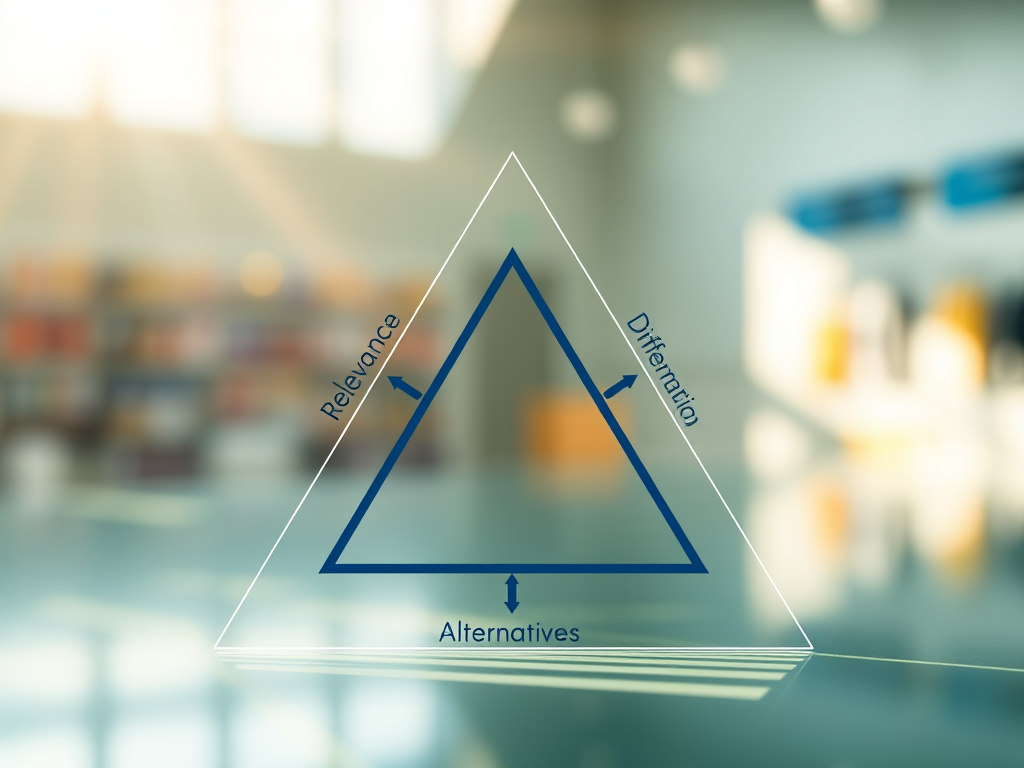
(From Lippincott) Provides the underlying platform for communications, reflecting the company’s/brand’s value proposition. Address:
definition — how the company defines its business or how the brand defines its competitive set; who we are and what we do;
differentiation — what makes the company/brand special; how we do it; and
deliverables — benefit delivered to its customers.

The evolution of private label brands

Did you know that private label brands (PL) have been around for almost a decade? Back in 1928, the Swiss introduced the PL concept and since then it has been spreading like wildfire. Actually, we should point out that PL is not only spreading but also “evolving.” We are witnessing a quiet renaissance, which deserves to be analyzed. This is the first installment of a series of essays on private label branding.

Migros eliminated the middleman, inventing the private label concept.

Migros eliminated the middleman, inventing the private label concept.

Let’s start by reviewing PL’s origins: It was invented during tough times, sometime between the WW1 and the WW2. Also, those were the years leading up to the Great Depression. So, it’s not a coincidence that the PL concept is deeply rooted in low cost. For decades, people were conditioned to think that PL was equal to cheapness, both in terms of value and quality. This tactic worked like a charm for many decades. The combination of no frills approach and intentional lack of beauty served its purpose. But over time, masses got richer and had more disposable income. The proliferation of choice became a major hurdle for PLs. So, the no frills approach had to evolve…

The famous "No Name" brand is still very popular

The famous “No Name” brand is still very popular

The next step in PL’s journey was the “me-too evolution.” In a crowded market, the easiest way to be recognized was to look similar to the leading brand. In addition to instant recognition, resembling to the market leader had unconscious effects: Consumers would automatically associate some of the positive attributes of the leading brand to the PL. As long as the PL looked like a poor cousin of the market leader, it was OK. That approach too, worked like a charm for a couple of decades. However, as time passed by, retailers realized that their PL brands had a halo effect on the retailer’s brand: The characterless, me-too brands started to negatively impact the overall image of the retailer’s brand. It was time for PL to evolve again…

Me-too store brands were the next evolution in private label branding

Me-too store brands were the next evolution in private label branding

Third generation PL brands look distinct. Really distinct… They are more than wannabe store brands. PLs are building their own personalities. Well-designed PL brands are occupying the shelves, giving CPGs a good run for their money. And they are relentless, infiltrating in every category. No longer they are offering just staples. Any product you can think of, you name it, PL has it. Retailers started to be proud of their store brands so much that they want those to be one of their key differentiators… And, “that” turbocharges the next and last evolution of PLs.

Private label brands now have their own look and feel. They look self-confident.

Private label brands now have their own look and feel. They look self-confident.

Self-confidence is an interesting thing: When you don’t trust yourself, people instinctually take notice and don’t trust you. But, when you have self-confidence, same people start trusting you. The more self-confidence you have, the more they trust you, the more they trust you, the more self-confidence you gain. It is a positive feedback loop. Now that PLs are building their own unique personality, people is taking notice and asking for more. That’s why today’s most successful PLs are becoming “destination brands.” People sometime switch supermarkets to buy a particular store brand. The future of PL looks really bright.

Canadian grocery store Loblaws' clothing line Joe Fresh became an international success story. A true destination brand

Canadian grocery store Loblaws’ clothing line Joe Fresh became an international success story. A true destination brand

On our next article, we will analyze the unconscious of PLs. Why do we buy PL? Is low cost the main motivator? What’s going on in our mind while picking a PL? Stay tuned.

Branding luxury

At first, this article might sound like a book review, but actually it is about a miserable experience of mine and a much-welcomed solution. Here’s how the story goes…

Luxury is in the eye of the beholder.

Luxury is in the eye of the beholder.

Read the rest of this entry

How to brand a destination?

Is place branding a money trap invented by evil advertising agencies? Is it a fool’s gold for destinations? Has any place ever benefited from so-called place branding? How about this frightening stat?: 86% of place branding projects fail within a year of introduction. Is there a way to break this curse? Let’s figure out the root cause of the problem first.

“A problem is the thick outermost layer of a fantasy.”

James Hillman

Read the rest of this entry

Archetypes or stereotypes?

Recently, I’ve learned that 86% of place branding projects fail. While the research does not explain why, I am willing to bet that one of the major causes of failure is “thinking stereotypically instead of archetypically”, and go even further to suggest the way to successfully branding destinations. Case in point: Ottawa.

Ottawa ad campaign

Read the rest of this entry

Know Canada?

Below, is the comment I left on an article on Brand New. My thoughts on Canada’s new campaign generated some interest, so I decided to share them with you. Enjoy it!

Know Canada

Peanut butter is Canadian

Read the rest of this entry

Are you asking the right questions?

Have you ever left a meeting questioning why you were summoned? What was the goal? What did you try to achieve? Well, I have been to too many meetings where I felt we wasted valuable time and effort. Also, I took part in so many branding projects that did no go anywhere. I know I am not alone. So, let’s see if we can fix the problem of ineffectiveness.

Read the rest of this entry

Smoothies and Tim Hortons… Success or failure?

Last week we talked about Starbucks’s recent experiment of serving alcohol in some of its locations. We ended up recommending them to create a second brand. We also said, on our next article we will focus on a successful line extension from Canada: Tim Horton’s, one of Starbucks’ archrivals. For those of you who are not familiar with the brand, here is how Wikipedia describes Tim Hortons: Read the rest of this entry

Alcohol and Starbucks… Success or failure?

I recently read an article by Mr. Martin Bishop from Landor about Starbucks serving regional wine and beer in some of its Seattle locations. Lately, Starbucks successfully updated its identity and announced that it aims to be more than a coffee company. The brand’s little experiment clearly shows that it means it. But I think such a line extension is the wrong way to go. Let me explain why. Read the rest of this entry

1+1=11

Branding a place or a large organization is a tough task. It is tough mainly because you are dealing with many stakeholders, each having their own agendas. When I face such a situation, I always say: “In branding 1+1=11.” Read the rest of this entry

When to hire a celebrity for endorsement?

Celebrity endorsement is one of the most popular brand building tools. However, more often than not, it does not deliver the desired results. Why some endorsements work and some don’t? Today, I will try to solve this intriguing problem. Here is what I recommend: Read the rest of this entry